
2002 (the best montage, in my opinion)

2002 (the best montage, in my opinion)

So what would happen if you took a young person and showed them such golden oldies as the "AM/FM" sketch or Chevy Chase as President Ford? They'd be baffled. I find those funny because I understand the references, but a lot of people do not.
SO a few years ago, I made a compilation of sketches which I thought DID hold up even today. This is what you could show a young person who doesn't understand why "cheeseburger cheeseburger cheeseburger" had such appeal 40+ years ago. I've added links where I could find them, and will add more as they turn up. (Those with an asterisk are not from the official SNL YouTube channel).
Cold open: The Wolverines (10/11/1975)
Monologue: The Castration Walk (4/16/1977)
Commercial: Jewess Jeans (2/16/1980)
Sketch: Jaws II (11/8/1975)
Sketch: Extreme Stupidity (12/11/1976)
Sketch: Nick Rails (2/10/1979); this is not the one with the Star Wars theme (1/28/1978)... but it's my favorite
Sketch: Gilda and Chevy in bed (2/18/1978)
Commercial: Royal Deluxe II (9/24/1977)*
Sketch: Word Association (12/13/1975)
Song: King Tut (4/22/1978)
Weekend Update: Some Girls (5/26/1979)
Sketch: Refrigerator Repairman (10/7/1978)
Sketch: Exorcist II (12/13/1975)
Sketch: Julia Child (12/9/1978)
Sketch: Fred Garvin (3/17/1979)
Sketch: Judy Miller (10/29/1977)
Sketch: Candy Slice in the studio (12/9/1978)
Commercial: Bass-O-Matic '76 (4/17/1976)*
Sketch: Richard Benjamin in a Scottish restaurant (4/7/1979)
Sketch: Lord & Lady D-Bag (5/24/1980)
Song: King Bee (1/17/1976)*
Sketch: Buck Henry rushing home to use the bathroom (11/10/1979)
Good nights: Last episode (5/24/1980)

For the 11th anniversary of “American Top 40” in
1981, Casey Kasem and his team assembled the 40 biggest hits (based on chart
metrics) by the Beatles – together, and solo. Almost all of these topped the
chart:
1-Hey Jude (1968)
2-I Want To Hold Your Hand (1964)
3-(Just Like) Starting Over (John) (1980)
4-Silly Love Songs (Paul) (1976)
5-My Sweet Lord/Isn't It a Pity (George) (1970)
6-Get Back (Beatles with Billy Preston) (1969)
7-My Love (Paul) (1973)
8-She Loves You (1964)
9-Help! (1965)
10-We Can Work It Out (1965)
11-Coming Up (Live At Glasgow) (Paul) (1980)
12-Yesterday (1965)
13-I Feel Fine (1964)
14-Can't Buy Me Love (1964)
15-Come Together/Something (1969)
16-Let It Be (1970)
17-A Hard Day's Night (1964)
18-Band On the Run (Paul) (1973)
19-Hello Goodbye (1967)
20-You're Sixteen (Ringo) (1973)
21-Paperback Writer (1966)
22-Woman (John) (1980, #2)
23-Listen To What the Man Said (Paul) (1975)
24-Uncle Albert/Admiral Halsey (Paul) (1971)
25-Eight Days a Week (1965)
26-Love Me Do (1964)
27-With A Little Luck (Paul) (1978)
28-Ticket To Ride (1965)
29-Photograph (Ringo) (1973)
30-The Long and Winding Road/For You Blue (1970)
31-Give Me Love (Give Me Peace On Earth) (George) (1973)
32-All You Need Is Love (1967)
33-Live and Let Die (Paul) (1973, #2)
34-Junior's Farm/Sally G (Paul) (1975, #3)
35-It Don't Come Easy (Ringo) (1971, #3)
36-Twist and Shout (1964, #2)
37-Please Please Me (1964, #3)
38-Goodnight Tonight (Paul) (1979, #5)
39-Penny Lane (1967)
40-Nowhere Man (1966, #3)
I was surprised to see so many disks from the Top 5 which
were not chart toppers, but obviously they were in the Top 40 for several weeks
and notched up more airplay. In fact, one #1 single (John’s “Whatever Gets You
Through the Night,” from 1974) didn’t make the list at all – probably since it
dropped off so quickly. Also not making the grade were:
Instant Karma (John) (1970, #3)
Imagine (John) (1971, #3)
No No Song (Ringo) (1974, #3)
Let 'Em In (Paul) (1976, #3)
Oh My My (Ringo) (1973, #5)
George’s “All Those Years Ago” was not included, probably since it was still on the chart in July ‘81. It would peak at #2 for three weeks around this time. Had AT40 made another Beatles special, I’m sure it would have made the cut. And the following songs almost certainly would have:
Ebony & Ivory (Paul w/Stevie Wonder) (1982)
The Girl Is Mine (Paul w/Michael Jackson) (1982, #2)
Say Say Say (Paul w/Michael Jackson) (1983)
Nobody Told Me (John) (1984, #5)
Got My Mind Set On You (George) (1987)
Not included in the AT40 special, obviously, are two British chart-toppers (#4 “Lady Madonna” and #8 “The Ballad of John and Yoko”). My theory about why they missed in America is that the former – being their last Capitol single before the “switch” to Apple -- was under-promoted. And “Ballad” was denied airplay in parts of the country for its use of the word “Christ.” Plus, it came out too soon after “Get Back” (which was still on the charts). Both songs are still popular today, as are the following… they’ve appeared on several Beatle hits compilations, but weren't in the AT40 countdown for the reasons indicated:
*From Me to You (1964)-a massive UK hit, and their first
official chart-topper there. In America, it was relegated to the B-side of "Please
Please Me" in 1964, and only charted at #41 (after previously charting at
#116 as an A-side in 1963)
*Maybe I'm Amazed (Paul) (1970)-one of Paul's most famous
songs was never released as a single. A live version hit #10 in 1977 and gets
airplay on oldies stations today.
*Mull of Kintyre (Paul) (1977)-a massive UK #1; it was the
biggest-selling single of all time for many years. In the US, it was the flip
side of "Girls School" (which hit #33)
*Pipes of Peace (Paul) (1983)-like "Mull" six
years earlier, this was a UK #1. In the US it was the flip side of "So
Bad" in 1984 (which hit #23)
*What Is Life (George) (1970, #10)
*Jet (Paul) (1973, #7)
*Watching the Wheels (John) (1980, #10)-the three songs
above get heavy airplay on oldies and classic rock stations, they’ve been used
in other media, but they weren’t massive hits on original release.
For reference, the 40 biggest Beatles (group only) singles were
compiled in the 2006 book, “Billboard’s Hottest Hits.” Interesting how things
changed in 25 years, with several songs ranking relatively higher than they did
in 1981:
1-Hey Jude
2-I Want To Hold Your Hand
3-She Loves You
4-Get Back
5-Let It Be
6-Can't Buy Me Love
7-Yesterday
8-We Can Work It Out
9-I Feel Fine
10-Help!
11-Hello Goodbye
12-A Hard Day's Night
13-Come Together/Something
14-Twist And Shout
15-All You Need Is Love
16-Love Me Do
17-Paperback Writer
18-Ticket To Ride
19-The Long And Winding Road
20-Eight Days A Week
21-Penny Lane
22-Please Please Me
23-Do You Want To Know A Secret?
24-Yellow Submarine
25-Lady Madonna
26-Nowhere Man
27-Got To Get You Into My Life
28-Revolution
29-She's A Woman
30-The Ballad Of John And Yoko
31-Day Tripper
32-The Beatles Movie Medley
33-Strawberry Fields Forever
34-And I Love Her
35-P.S. I Love You
36-Eleanor Rigby
37-I Saw Her Standing There
38-Ain't She Sweet
39-Matchbox
40-Free As A Bird

To me, that means they’re both right; it’s just a question
of whether you want a record that sounds good to you, or something authentic?
If you want something that will probably sound good to most
people, Vinyl Me, Please reissued this album in 2021. While the ERC edition
cost about $500 and is sold out, you can still get the VMP for under $70 (it only recently sold out). And the
VMP sounds excellent because they (digitally) addressed some of the tape issues
that Fremer elaborates on. It also looks cooler (green vinyl with a white
promo-style label), has a very nicely done jacket (on ridiculously heavy stock),
recreates the original inner sleeve (which ERC also did), and includes a re-created
French EP!
This does raise issues around what a reissue should be. I’ve
seen this hashed out since the 1980s: should a reissue 1) reflect the highest
possible fidelity, or 2) reflect what the very first pressing sounded like, or
3) what the artist INTENDED things to sound like?
So, is the VMP what the Doors wanted it to sound like (had
technology allowed) in 1967? If Bruce Botnick is endorsing it (as Fremer points
out), I think that’s good enough. And clearly they — or Elektra -- weren’t
happy with the mono back in ‘67.
But ERC’s selling point is originality, and that’s fine for
some listeners, too.
If all this seems confusing, consider the very first UK
pressings of The Beatles’ “Rubber Soul” (“loud cut”) and “Revolver” (with the
wrong mix of “Tomorrow Never Knows”). By all accounts, neither is what the group
wanted, nor is “Rubber Soul” of the highest possible fidelity. And that’s why
they weren’t recreated or used as reference for the 2014 mono box. Yet there
are plenty of people who seek them out and would pay handsomely for an ERC-like
recreation.
My review of the VMP version:

SUNDAY:
“60 Minutes” was the top-rated show on all of TV. “Archie
Bunker's Place,” “The Jeffersons,” “One Day at a Time” and “Trapper John” were
all in the teens and winding down, creatively at least. After ABP was
one-season wonder “Gloria” -- a strange concoction. Only ABC could muster any
heat, with a 9pm movie.
MONDAY:
What a rad lineup! “Square Pegs,” “Private Benjamin,” “MASH,”
“Newhart,” “Cagney & Lacey”... unfortunately, only “Newhart” would survive
into the next year (though “Cagney” would return in spring '84 after viewer
outrage). Again, only ABC could muster any heat, with “That's Incredible” and
then another 9pm movie.
TUESDAY:
ABC's traditionally strong slate was showing its weakness at
8pm: “Happy Days” and “Laverne & Shirley” plunged to the low 20s thanks to “The
A-Team.” On CBS, that meant Disney (and later, Tim Conway's "Ace
Crawford") were in the ratings cellar. A 9pm movie did okay for CBS (#27)
up against ABC’s lineup: “Three's Company” (#6), “9 to 5” and “Hart to Hart.” BTW
that meant NBC's 10pm “St. Elsewhere” ranked a lowly #87.
WEDNESDAY:
ABC had “The Fall Guy” (#14) and “Dynasty” (#5). So CBS
couldn't gain any traction with “Seven Brides for Seven Brothers,” “Alice,” or “Filthy
Rich” (a proto-“Designing Women”). NBC had “Real People” (#30) at 8, but then
from 9-11p did terribly with various combinations of “The Facts of Life,” “Family
Ties,” “Buffalo Bill,” “Quincy,” “Taxi”... and "The News Is The
News," which sounds just like "Yesterday," proposed in 1980 by
Herb Sargent (SNL). It was essentially an expansion of "Weekend
Update" to a nightly series.
THURSDAY:
"Must See TV" wasn't quite a hit yet, so CBS was
flying high with #2 “Magnum,” #7 “Simon & Simon,” and #20 “Knots Landing.”
NBC had “Fame” (with Yummy Award-winner LEE CURRERI!!!!!!!), “Cheers,” “Taxi”
and “Hill Street Blues” (#21), billed in promos as the Best Night of Television
on Television. ABC had several shows which are well-remembered today but
weren't doing so great in '82-83: “20/20,” “Too Close For Comfort,” “Benson,” “Greatest
American Hero”... plus a string of weird flops (“Joanie Loves Chachi,” “Condo”
w/McLean Stevenson) and British adaptations (“Reggie” and “Amanda's”).
FRIDAY:
Another big night for CBS, a few years before stiff
competition from ABC’s TGIF: “Dukes of Hazzard,” despite its weird recasting,
still managed to come in at #30 (tying “Real People”), followed by #2 “Dallas”
and #8 “Falcon Crest.” Among many floundering series on the other networks,
standouts (for various reasons) include ABC's “The New Odd Couple” and NBC's “Knight
Rider” and “Remington Steele.”
SATURDAY:
Seemingly a dumping ground for all three networks, except #9
“Love Boat” on ABC. CBS offered Disney at 8p (soon replaced by “Wizards &
Warriors”) followed by a 9p movie.

Vee Jay 498: Please Please Me/Ask Me Why
The Beatles’ American debut was their second UK single – a
big hit in England but a flop in the US on tiny R&B label, Vee-Jay. Also
released on Capitol in Canada (72090), where it did well.
Vee Jay 522: From Me To You/Thank You Girl
The Beatles’ third UK single was a big hit, so Vee Jay tried
releasing it – for another flop. Again, it did well in Canada on Capitol
(72101).
Swan 4152: She
Loves You/I’ll Get You
Vee Jay had flopped with two singles which had been massive
UK hits. The label then canceled the release of the group’s first American LP
and also failed to pay royalties, voiding its contract. So, the Beatles’
massively popular fourth UK single instead was released on Philadelphia-based
Swan Records. Like previous American releases, it flopped, but did well in Canada
(Capitol 72125). Swan reissued the disk in the wake of Beatlemania and it
topped the charts. After Swan’s contract ran out in late 1964, however, Capitol
never reissued this single – possibly because both sides were already included
on the chart-topping LP, “The Beatles Second Album.” It was finally available
again in 1994 on Capitol colored vinyl (“For Jukeboxes only!” according to the
label) as #S7-17688.
Capitol (Canada) 72144: Roll Over Beethoven/Misery
I have no idea why these cuts – one each from the group’s first
two UK albums – were coupled together and released in Canada in 1963. But the disk
hit #2 there and sold decently as an import into the US (hitting #68). In 1965,
it came out on the rare green swirl Capitol Starline budget reissue label
(#6065). The b-side had also appeared in the US on Vee Jay, but would disappear
until Capitol’s 1980 “Rarities” album.
Capitol 5112: I Want To Hold Your Hand/I Saw Her
Standing There
Capitol finally takes a chance and releases the group’s fifth UK single, hitting pay dirt. Reissued on Capitol colored vinyl (S7-17689).
Vee Jay 581: Please Please Me/From Me To You
Vee Jay realized it could sell records by getting the heat from
Capitol’s massive Beatles campaign. Not wanting to take a chance, they took two
big UK hits – which had previously been flops in the US – and combined them. Reissued -- along with five other
Beatle 45s -- on Oct. 11, 1965, on the very rare Capitol Starline label (green
swirl) #6063, but never on Capitol colored vinyl for some reason.
Tollie
T-9001: Twist And Shout/There's A Place
Vee
Jay uses its offshoot label to get another Beatle record in the charts. Also
reissued in 1965 on the Starline label (#6061), and again on Capitol colored
vinyl in 1994 (S7-17699). The a-side was also issued as a promo-only single in
1986 to capitalize on its use in “Ferrie Bueller’s Day Off.” The b-side was an
orphan from the UK “Please Please Me” LP when it was reconfigured into
Capitol’s “The Early Beatles.” Its only other US appearances would be on Vee
Jay’s version of the UK LP (“Introducing the Beatles”) and on Capitol’s 1980
“Rarities” album.
Tollie
T-9008: Love Me Do/P.S. I Love You
Vee-Jay
(and its new subsidiary, Tollie) had won the rights to continue releasing
Beatle product until October, 1964, and used that time to rush out what had
been the group’s debut UK single. A minor hit in 1962 England, but a #1 in 1964
America. Reissued in the 1965 Starline batch (#6062) and on Capitol colored
vinyl (S7-56785).
Capitol
5150: Can’t Buy Me Love/You Can’t Do That
After
several non-Capitol releases (and the accompanying legal action from EMI),
Capitol puts out the first hotly anticipated track from the group’s upcoming
film. Reissued on Capitol colored vinyl as S7-17690.
Capitol
(Canada) 72144: All My Loving/This Boy
Beatles
records were selling so well that this Canadian disk sold well enough in the
northern US to chart at #45 as an import – no doubt helped by the fact that the
A-side was the first song performed by the group during its first
epoch-shattering appearance on “The Ed Sullivan Show” (February 9, 1964).
Finally officially reissued by Capitol (US) in 1971 on the red-and-orange-scheme
“target” label.
Vee
Jay 587: Do You Want To Know A Secret/Thank You Girl
Vee
Jay continued slicing-and-dicing the 16 Beatle tracks it had access to, this
time giving George his first a-side vocal (and last until 1969) and notching a
#2 hit. The b-side was leftover from the company’s flop second attempt to get a
Beatle hit in 1963. Popular enough to be
reissued on Capitol Starline in 1965 (#6064).
Capitol
5222: A Hard Day’s Night/I Should Have Known Better
With
so many Beatle disks spinning past cash registers, Capitol puts out only its
third attempt – and third chart-topper. Also
a UK #1, but with a different B-side (“I’ll Be Back”) which would be the
version reissued on Capitol colored vinyl (S7-17692).
Odeon
(German) 45-O 29502: Sie Liebt Dich/Komm Gibb
EMI’s
German affiliate successfully convinced the British company that it could only
sell records sung in its native tongue. The Beatles dutifully recorded German
vocals for its massively popular fourth and fifth UK a-sides for release in
that country. The odd disk would see its b-side included (as a novelty) on
Capitol’s third US LP. For some reason, the company ignored the a-side… which
would be picked up by Swan Records as #72162. Apparently, someone at the tiny
Philadelphia firm assumed they had rights to ANY version of “She Loves You.”
The disk still made it to #97 in the charts.
Capitol
5234: I'll Cry Instead/I'm Happy Just to Dance With You
Capitol
5235: And I Love Her/If I Fell
Four
of the seven cuts from the UK “A Hard Day’s Night” LP hadn’t been released as
45s yet. Capitol now had sole right to Beatle records in America – so it put
out the songs. But with the film out of theaters by this point, they were minor
hits.
Capitol
5255: Matchbox/Slow Down
Two
songs from the UK “Long Tall Sally” EP had already appeared on “The Beatles
Second Album.” So these two were oddly coupled and sent out as a single,
reaching #17 and #25, respectively.
Capitol
5327: I Feel Fine/She’s A Woman
The
Beatles’ eighth UK single was a Christmas chart-topper – and did the same in
America at the beginning of 1965.
Capitol
5371: Eight Days A Week/I Don’t Want To Spoil The Party
Two
cuts from the UK “Beatles For Sale” LP became a US #1 single.
Capitol
5407: Ticket To Ride/Yes It Is
Capitol
5476: Help!/Im Down
The
group’s ninth and tenth UK 45s topped the charts on both sides of the Atlantic
– the former sporting the “Help!” film’s original title (“Eight Arms to Hold
You”). The latter was reissued on Capitol colored vinyl (#S7-17691).
Capitol
5498: Yesterday/Act Naturally
Two
songs pulled from the non-soundtrack side of the UK “Help!” LP – a massive #1
in America. Reissued on Capitol colored vinyl (#S7-18901).
Capitol
Starline 6066: Kansas City/Boys
I’m not
sure who decided that two cover songs needed to be coupled and released on the
budget label, but here’s the sixth and final Beatle disk in the Starline series.
Perhaps the releases were intended to make up for the gap between material from
the UK “Help!” and “Rubber Soul” LPs? Charted at #102.
Capitol
5555: We Can Work It Out/Day Tripper
The
Beatles’ 11th UK single was another Christmas chart-topper – and did
the same in America at the beginning of 1966. Reissued on Capitol colored vinyl
(#S7-18895).
Capitol
5587: Nowhere Man/What Goes On
In
1964, Capitol had pulled two cuts from the LP released by the group at
Christmas – and got a chart topper in early ’65. A year later, they tried the
same thing. But “Nowhere Man” only made #3 in America in early 1966. Reissued on
Capitol colored vinyl (#S7-18894).
Capitol
5651: Paperback/Writer Rain
Capitol
5715: Eleanor Rigby/Yellow Submarine
Capitol
5810: Strawberry Fields Forever/Penny Lane
Capitol
5964: All You Need Is Love/Baby, You’re A Rich Man
For
the rest of 1966, Capitol would follow the Beatles’ wishes and conform US
single releases to those in the UK. For 1967, it was written into their new
9-year EMI contract. All reissued on Capitol colored vinyl as, respectively, #S7-18902,
17696, 17697, 17693.
Capitol
2056: Hello, Goodbye/I Am The Walrus
Capitol
2138: Lady Madonna/The Inner Light
In
late 1967, Capitol ran out of numbers in its 5000 series, and rolled it over to
the 2000 series – hence the change in catalog numbers. While “Hello, Goodbye”
hit #1, “Lady Madonna” only got to #4. I wonder if that’s because it was the
group’s last release on Capitol proper, before they started their own Apple
label (to be manufactured and distributed by Capitol). Were the promo men a bit
miffed? I also wonder if the same thing didn’t happen in mid-1975, when Capitol
realized that three of the four Beatles were leaving at the end of the
aforementioned 9-year contract: Paul’s three singles in 1975 hit #1, #12, and
#35. John, George, and Ringo, however, were leaving and saw their sales rapidly
decline.
Apple
2276: Hey Jude/Revolution
Apple
2490: Get Back/Don’t Let Me Down
Apple
2531: The Ballad Of John And Yoko/Old Brown Shoe
Apple
2654: Something Come Together
Apple
2764: Let It Be/You Know My Name (Look Up The Number)
Four
more US chart-toppers which conformed to their UK counterparts… while Apple
2531 only got to #8 in America, likely due to many stations banning it for use
of the word “Christ.” Only three of these were reissued on Capitol colored
vinyl: “Hey Jude” (#S7-17694), “Something” (17698), and “Let It Be” (17695).
Apple
2832: The Long And Winding Road/For You Blue
Someone
(likely Allen Klein) talked the Beatles into letting Capitol release another US
single from the “Let It Be” album – another #1 (and their last). Reissued on
Capitol colored vinyl (#S7-18898).
Apple
(Netherlands) 5C 006-04982: All Together Now/Hey Bulldog
There
wouldn't be any "new" US or UK Beatle singles until 1976, when EMI
was free to repackage the group's material without getting permission. However,
this 1972 single of two cuts from the "Yellow Submarine" LP was
likely a tie-in to the film being reissued. See Capitol S7-18893 below.
Capitol
4274: Got To Get You Into My Life/Helter Skelter
A 45
to promote the “Rock and Roll Music” album in America. This hit #8 while Paul’s
“Silly Love Songs” was on its way down the chart, and “Let ‘Em In” was on its
way up – giving him three Top 40 entries in the same week. That was a feat
which hadn’t been achieved since… 1964, when The Beatles did it. Reissued on
Capitol colored vinyl (S7-18899).
Capitol
4347: Ob-La-Di, Ob-La-Da/Julia
Two
cuts from “The White Album” which only reached #49 in 1976. Reissued on Capitol
colored vinyl (S7-18900).
Capitol
4612: Sgt. Pepper's; With A Little Help From My Friends/A Day In The Life
A
maxi-single with three cuts from “Sgt. Pepper,” likely as a tie-in to the 1978
issue of the album as a picture disk. Reissued on Capitol colored vinyl (S7-17701).
Capitol
S7-17488: Birthday/Taxman
Capitol
S7-17700: Here Comes The Sun/Octopus's Garden
Capitol
S7-18891: Across The Universe/Two Of Us
Capitol
S7-18897: Here, There And Everywhere/Good Day Sunshine
More
singles which were only released in the Capitol colored vinyl series, combining
popular tunes from the same albums (on each) and giving George (and even Ringo)
more 45-placings.
Capitol
S7-18893: It's All Too Much/Only A Northern Song
A
colored vinyl single of the two remaining (George) songs from the “Yellow
Submarine” LP which were NOT released on the 1972 Dutch single above. Get both 45s
and your jukebox can have the entire film soundtrack!
Capitol
S7-18896: Lucy In The Sky With Diamonds/When I'm 64
Capitol
S7-18890: Magical Mystery Tour/The Fool On The Hill
Capitol
S7-18892: While My Guitar Gently Weeps/Blackbird
Capitol
S7-18889: You've Got To Hide Your Love Away/I've Just Seen A Face
Capitol
S7-19341: Norwegian Wood/If I Needed Someone
More
singles which were only released in the Capitol colored vinyl series, each combining
two popular tunes from one album. The last (“Norwegian Wood”) was issued on
black vinyl for some reason; it’s green vinyl counterpart was a limited edition
from Collector’s Choice music, numbered 18888.
Notice
that each of these last ten 45s couples two songs from every UK Beatle album
after 1964 – and pulls two from the double “White Album.” Appropriate. Also,
there were essentially two batches of 14 colored vinyl singles… and a third
batch could have easily been made from the remaining 10 Capitol and 4 Starline
releases. Perhaps this was planned and never happened?
"The Odd Couple"
The show's first season was shot single-cam, on a closed
set, an approach which necessitates multiple directors. But even for seasons
2-5, it was all over the map. The most frequent directors were quite
accomplished:
Jerry Paris (18 episodes)
Jack Donohue (14)
Hal Cooper; Mel Ferber (11)
Frank Buxton (9)
Beyond that, I get the sense they were letting anyone who
could handle directing do the job -- usually one of the show’s writers or
producers, though there are definitely some notable directors like Jay
Sandrich, George Tyne, and Alan Rafkin:
Bruce Bilson; Garry Marshall; Jay Sandrich (6 episodes)
Harvey Miller (5)
George Tyne; Norm Gray (4)
Alan Rafkin; Bob Birnbaum; Jerry Belson (3)
Alex March; Charles R. Rondeau; George Marshall (2)
Charles Shyer; Dan Dailey; Dick Michaels; Jack Winter;
George Tyne and Bob Birnbaum (1)
“WKRP in Cincinnati”
This show is the poster child for constant schedule changes.
Seems like every time audiences found the show, CBS moved it. And the same with
directors – each time someone notched up an impressive string of episodes, they
were snatched up by another show:
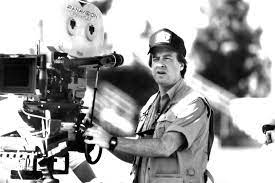
Rod Daniel (23 episodes) -- by the way, that's his picture above
Will Mackenzie (17)
Asaad Kelada (15) – left for “The Facts of Life”
Linda Day (11) – left for “One Day at a Time”
The rest of the run has a large number of castmembers/show
staff mixed with some surprising names like John Stamos’ uncle, or George
Gaynes (of later of “Punky Brewster” and the Hugh Wilson-directed film, “Police
Academy”):
Frank Bonner (6)
Michael Zinberg (4)
Nick Stamos; Dolores Ferraro (3)
Hugh Wilson; Dan Guntzelman (2)
George Gaynes; Jay Sandrich; Howard Hesseman; Gordon Jump
(1)
“NewsRadio”
Tom Cherones left “Seinfeld” after its fifth season to helm
“NewsRadio,” eventually directing 57 episodes. The remainder went to a mix of
people – almost all of whom are well-known sitcom directors. I guess the
ratings never materialized because the show -- like its radio cousin, “WKRP” –
kept getting moved around. Or maybe it was just too smart:
James Burrows (7 episodes) – Burrows often directs the
pilots for multicam sitcoms, but here he stuck around and did the first four
shows, returning for three more near the end of season two.
Alan Myerson; Judi Elterman (5)
Patrick Maloney (4)
Gregg Heschong; Leonard R. Garner Jr.; Michael Lembeck (3)
Lee Shallat Chemel; Peter Bonerz; Skip Collector (2)
Dave Foley; Joe Furey; Peter Baldwin; Rich Beren (1)
“Barney Miller”
An interesting mix here, but Noam Pitlik directed 102
episodes from seasons 1-7. The show almost ended at that time according to thisHal Linden interview, but everyone agreed to return for an eighth and final
season (1981-82). Unfortunately, Pitlik had signed on to become a regular
director for “Taxi,” taking over for James Burrows, who was leaving to begin
formulating “Cheers.” And fittingly, after “Barney” ended in the spring of ’82,
its Thursday 9pm time slot was taken over (on another network) by “Cheers.”
Anyhow, back to “Barney” directors, there are a LOT of people who did just one
or two episodes, probably because of the long shoots and endless rewrites.
Still, the show looked remarkably consistent on-air (again, this exercise
doesn’t mean these shows weren’t excellent; it just means that I suspect they
had a ratings hex). Even showrunner Danny Arnold, who didn’t do much directing
by this point in his career, gets into the act… I wonder if he stepped in when
a previously hired director dropped out or suddenly had issues with the
production schedule? That’s a LOT of times as a sub!
Danny Arnold (12 episodes)
Bruce Bilson (10)
Lee Bernhardi (8)
Max Gail (5)
Gennaro Montanino (4)
Alex March; David Swift; Hal Linden; Jeremiah Morris (3)
Alan Bergmann; Homer Powell; Lee Lochhead; Tony Sheehan (2)
Allen Baron; Bill Davis; Bob Finkel; Dennis Steinmetz; John
Rich; Mark Warren; Richard Kinon; Stan Lathan; Danny Arnold & Alex March
(1)
